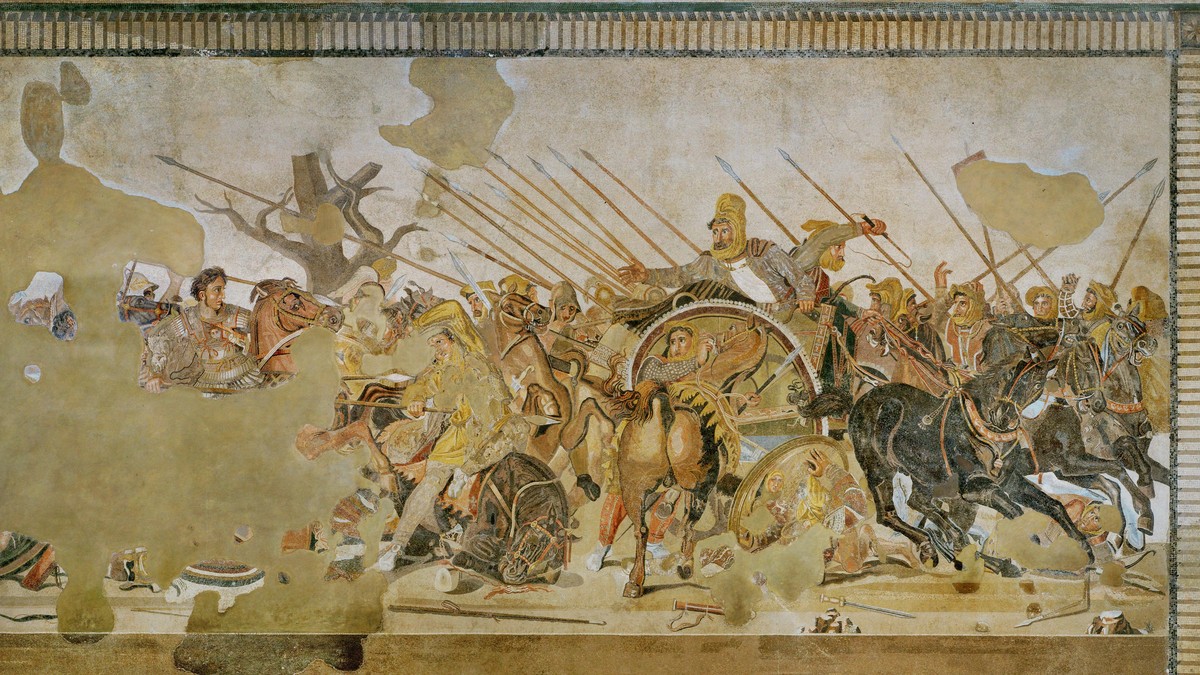
🏛️ Hellenistic Historiography Overview
A comprehensive academic investigation of the Hellenistic Era (323–31 BCE). This dissertation analyzes the operational campaigns of Alexander the Great, the tactical deployment of the Macedonian sarissa phalanx and Companion cavalry, the geopolitical fragmentation of the Diadochi successor states, and the monumental scholarly achievements of the Great Library and Mouseion of Alexandria.
The death of Alexander III of Macedon (‘the Great’) at Babylon in June 323 BCE marks the conventional terminus of the Classical Greek era and the violent, dazzling birth of the Hellenistic Age (c. 323–31 BCE). Over the course of an astonishing eleven-year military campaign spanning more than thirty thousand kilometers, Alexander dismantled the Achaemenid Persian Empire—the greatest imperial hegemony of the ancient Near East—and projected Greek language, military science, urban planning, visual arts, and philosophical discourse across the Levant, Egypt, Mesopotamia, the Iranian plateau, and the Indus River valley. The traditional, insular world of the classical Greek city-state (the polis) was abruptly shattered, replaced by vast, cosmopolitan, multi-ethnic dynastic monarchies.
Following Alexander’s sudden demise without a designated adult heir at age thirty-two, his brilliant, fiercely ambitious senior generals—the Diadochi (‘the Successors’)—plunged the Afro-Eurasian world into five decades of unremitting imperial warfare. Out of this catastrophic geopolitical furnace emerged three massive successor dynasties that dominated Mediterranean statecraft until the Roman conquest: the Ptolemaic Kingdom of Egypt, the Seleucid Empire of the Near East, and the Antigonid Dynasty of Macedonia. This geopolitical transformation fostered an unprecedented cross-pollination of Hellenic, Persian, Babylonian, and Egyptian cultures, transforming coastal hubs—most spectacularly the royal city of Alexandria ad Aegyptum—into vibrant epicenters of monumental architecture, international maritime trade, and scientific revolutions that anticipated the modern world.
1. The Macedonian Military Machine: Philip II, The Sarissa Phalanx, and Chariot Neutralization
The military instrument that allowed Alexander to conquer the known world was not invented by him, but by his visionary father, Philip II of Macedon (r. 359–336 BCE). Inheriting a fragmented, impoverished kingdom on the brink of collapse from Illyrian and Thracian invasions, Philip revolutionized every component of the Macedonian army, transforming it into the ancient world’s first fully professional combined-arms military machine.
The core of this system was the Macedonian Phalanx, comprised of the Pezhetairoi (‘Foot Companions’). Discarding the heavy, bulky hoplite shield and short 2.5-meter spear of classical Greece, Philip equipped his infantrymen with a revolutionary weapon: the Sarissa—a colossal two-handed pike fashioned from cornel wood, measuring between 5 and 6.5 meters in length and weighing over 5.5 kilograms. To wield this massive pike with both hands, the phalangite strapped a smaller, lighter bronze-rimmed shield (the pelte) across his left shoulder.
Arrayed in dense tactical formations sixteen ranks deep, the spear points of the first five ranks projected forward past the front line of the formation, presenting attacking infantry and cavalry with an impenetrable wall of bristling iron spear points. The remaining eleven ranks held their sarissas angled upward at forty-five degrees, forming an acoustic and physical canopy that deflected enemy arrow volleys and added crushing momentum to the forward charge.
Crucially, Philip and Alexander utilized the phalanx not as a mobile strike force, but as an unbreakable defensive ‘anvil’. The decisive ‘hammer’ was the elite heavy shock cavalry: the Hetairoi (‘Companion Cavalry’). Recruited from the landed Macedonian nobility and mounted on robust Thessalian warhorses, the Companions charged in a wedge formation commanded personally by the monarch, smashing into the gaps created in the enemy lines by the pin-down maneuvers of the phalanx.
| Alexander’s Major Battle | Date & Location | Opposing Commander | Decisive Tactical Operational Maneuver |
|---|---|---|---|
| Battle of the Granicus | 334 BCE (Northwestern Anatolia) | Persian Satraps & Memnon of Rhodes | Direct diagonal cavalry assault across muddy riverbank; broke Persian cavalry center |
| Battle of Issus | 333 BCE (Cilicia/Syria Border) | King Darius III (Achaemenid Empire) | Right-wing Companion cavalry breakthrough in narrow coastal plain; direct assault on Darius’ chariot |
| Siege of Tyre | 332 BCE (Phoenician Coast) | Tyrian Naval Commanders | Construction of a kilometer-long stone causeway (mole) across open sea; ship-mounted siege engines |
| Battle of Gaugamela | 331 BCE (Northern Mesopotamia) | King Darius III (Full Imperial Army) | Oblique echelon march to draw Persian cavalry outward; sudden lightning wedge charge into Persian center |
| Battle of the Hydaspes | 326 BCE (Punjab, Ancient India) | King Porus (Paurava Kingdom) | Clandestine monsoon river crossing; complex cavalry flanking to neutralize 200 Indian war elephants |
2. Alexander’s Operational Campaigns: From the Hellespont to the Hydaspes
Crossing the Hellespont into Asia Minor in the spring of 334 BCE, Alexander commenced a decade of warfare characterized by supreme operational audacity and rapid logistical mobility. Following his initial victory at the Granicus River, he untied the legendary Gordian Knot in Phrygia, fulfilling the ancient prophecy that the man who untied the intricate cornel-bark knot would become Lord of Asia.
At Gaugamela (331 BCE), on the wide, dust-choked plains near modern Erbil, Iraq, Alexander confronted Darius III’s supreme imperial host, which included scythed chariots, Bactrian heavy cavalry, and Indian war elephants. Darius had leveled the ground to maximize chariot mobility. Alexander anticipated this tactic: as the Persian chariots charged, the light Macedonian Agrianian javelin throwers stepped aside, creating controlled lanes through the phalanx. The charioteers raced harmlessly through the open gaps, where they were pulled from their vehicles and dispatched from the rear.
Alexander then executed his signature operational maneuver: he marched his right wing obliquely outward, drawing the elite Persian left-wing cavalry away from their imperial center. The moment a critical gap opened in the Persian line, Alexander formed his Companions into a massive wedge and charged directly into the breach, driving his spear toward Darius’ personal chariot. Terrified by the ferocity of the assault, Darius fled the battlefield, triggering the total collapse of the Achaemenid empire and allowing Alexander to capture the imperial capitals of Babylon, Susa, and Persepolis.
3. The Wars of the Diadochi and The Tripartite Hellenistic World
Alexander’s death in the palace of Nebuchadnezzar II at Babylon unleashed a violent power vacuum. On his deathbed, when asked by his marshals to whom he bequeathed his empire, Alexander allegedly whispered: ‘To the strongest’ (tôi kratistôi). For the next half-century, his generals fought the brutal Wars of the Diadochi (322–275 BCE), resulting in the assassination of Alexander’s mother Olympias, his wife Roxana, and his young son Alexander IV, extinguishing the ancient Argead royal dynasty.
Out of the slaughter at the Battle of Ipsus (301 BCE) and the Battle of Corupedium (281 BCE), three primary successor dynasties consolidated control:
- The Ptolemaic Dynasty of Egypt (Capital: Alexandria): Founded by Alexander’s childhood companion Ptolemy I Soter. The Ptolemies merged Hellenic administrative efficiency with pharaonic divine kingship, reigning for three centuries over the richest agrarian economy in the Mediterranean, culminating in the reign of Cleopatra VII.
- The Seleucid Empire (Capitals: Antioch and Seleucia-on-the-Tigris): Founded by Seleucus I Nicator. Encompassing Mesopotamia, Syria, Persia, and parts of Anatolia, the Seleucids established hundreds of Greek colony-cities (poleis) across the Near East, creating a vast cultural network that blended Hellenic civic institutions with ancient Mesopotamian and Persian traditions.
- The Antigonid Dynasty of Macedonia (Capital: Pella): Founded by Antigonus I Monophthalmus (‘the One-Eyed’) and secured by his grandson Antigonus II Gonatas. The Antigonids maintained hegemony over Greece and the Aegean through strategic garrison fortresses (‘the Fetters of Greece’: Chalcis, Corinth, and Demetrias).
4. Alexandria ad Aegyptum: The Cosmopolis of Global Commerce and Intellect
Founded by Alexander on the Mediterranean coast of Egypt in 331 BCE and laid out on an orthogonal grid plan by the architect Dinocrates of Rhodes, Alexandria rapidly supplanted Athens as the intellectual, artistic, and commercial capital of the ancient world. Connected to the Mediterranean by the double harbor of Portus Magnus and Eunostos, and linked to the Nile River by a freshwater canal, Alexandria functioned as the supreme transshipment hub connecting Mediterranean markets with the luxury trade of Arabia, India, and sub-Saharan Africa.
Guarding the entrance to the harbor stood one of the Seven Wonders of the Ancient World: the Pharos Lighthouse of Alexandria. Engineered by Sostratus of Cnidus during the reigns of Ptolemy I and Ptolemy II, the monumental white limestone and granite tower soared to a height of over 100 meters across three tiers: a square base, an octagonal mid-section, and a cylindrical summit crowned by a colossal bronze statue of Zeus Soter. At its apex, a roaring wood fire was amplified by massive polished bronze concave mirrors, casting a navigational beam visible to mariners across fifty kilometers of open sea, symbolizing the radiant intellectual and technological supremacy of the Ptolemaic state.
📜 The Mouseion and the Great Library of Alexandria
Established by Ptolemy I and expanded by Demetrius of Phalerum, the Mouseion (‘Shrine of the Muses’) was the ancient world’s first state-funded scientific research institute. Leading scholars were provided royal stipends, free meals, and luxury quarters to conduct research. Attached to it was the Great Library of Alexandria, whose collection exceeded 500,000 papyrus scrolls. Ptolemaic royal agents boarded every merchant ship entering Alexandria’s harbor, confiscating all manuscripts, transcribing copies on royal papyrus, and returning the copies to the owners while depositing the original scrolls in the Library’s archive.
5. The Alexandrian Scientific Renaissance: Geometry, Astronomy, and Mechanics
Within the fertile intellectual atmosphere of Hellenistic Alexandria, scholars achieved technological and mathematical breakthroughs that would not be surpassed until the European Scientific Revolution:
- Euclid (c. 300 BCE): Authored the Elements (Stoicheia), a masterwork of deductive mathematics in thirteen books that synthesized planar geometry, number theory, and solid geometry from five self-evident axioms, establishing the foundational axiomatic method that has underpinned mathematical reasoning for over two millennia.
- Eratosthenes of Cyrene (c. 276–194 BCE): Chief Librarian of Alexandria who calculated the physical circumference of the Earth with astounding accuracy. Observing that at solar noon on the summer solstice in Syene (modern Aswan), sunlight shone directly down the shaft of a deep well without casting a shadow, while in Alexandria (800 km north), a vertical obelisk cast a shadow of 7.2 degrees (one-fiftieth of a circle), Eratosthenes calculated Earth’s circumference at 252,000 stadia (roughly 39,375 km)—within a staggering 1.5% of modern satellite measurements.
- Archimedes of Syracuse (c. 287–212 BCE): Studied in Alexandria; formulated the physics of hydrostatic pressure (Archimedes’ Principle), the laws of the lever and compound pulley, the Archimedean screw water pump, and calculated the mathematical constant Pi (π) with unprecedented precision.
- Herophilus of Chalcedon and Erasistratus of Ceos: Pioneered human anatomical dissection and vivisection at Alexandria, discovering that the brain—not the heart—was the physical seat of intelligence, mapping the human nervous system, differentiating between sensory and motor nerves, and demonstrating that arteries carried flowing blood rather than air.
- Hero of Alexandria (c. 10–70 CE): Engineered the Aeolipile—the world’s first functioning steam engine—alongside programmable automated theatrical puppets, coin-operated holy water vending machines, and hydraulic organ instruments.
6. The Hellenistic Legacy and The Looming Shadow of Rome
The Hellenistic period fundamentally redefined the human relationship to culture, empire, and identity. The insular definition of Greekness based on ethnic blood was replaced by an inclusive cultural definition formulated by the Athenian orator Isocrates: ‘The name Hellene is applied no longer to race, but to intellect; and those are called Hellenes who share our educational culture (paideia) rather than our shared descent.’
Yet, the relentless dynastic infighting between the Ptolemies, Seleucids, and Antigonids exhausted the financial and human resources of the Greek world. In the western Mediterranean, a rising, ruthless military power was watching: the Roman Republic. Beginning with the Second Macedonian War and the proclamation of ‘the freedom of the Greeks’ by Titus Quinctius Flamininus in 196 BCE, Roman legions systematically crushed the rigid Macedonian phalanxes at Cynoscephalae (197 BCE) and Pydna (168 BCE). The final dramatic act concluded at the naval Battle of Actium (31 BCE), where Octavian’s Roman fleet defeated Mark Antony and Cleopatra VII, ending the Ptolemaic dynasty and incorporating Egypt into the Roman Empire. Yet, as the Roman poet Horace famously recognized: ‘Captive Greece took captive her rude conqueror, and brought her arts to rustic Latium.’ The intellectual, artistic, and philosophical achievements of Hellenism were permanently woven into the fabric of the Roman world, enduring as the classical foundation of Western civilization.