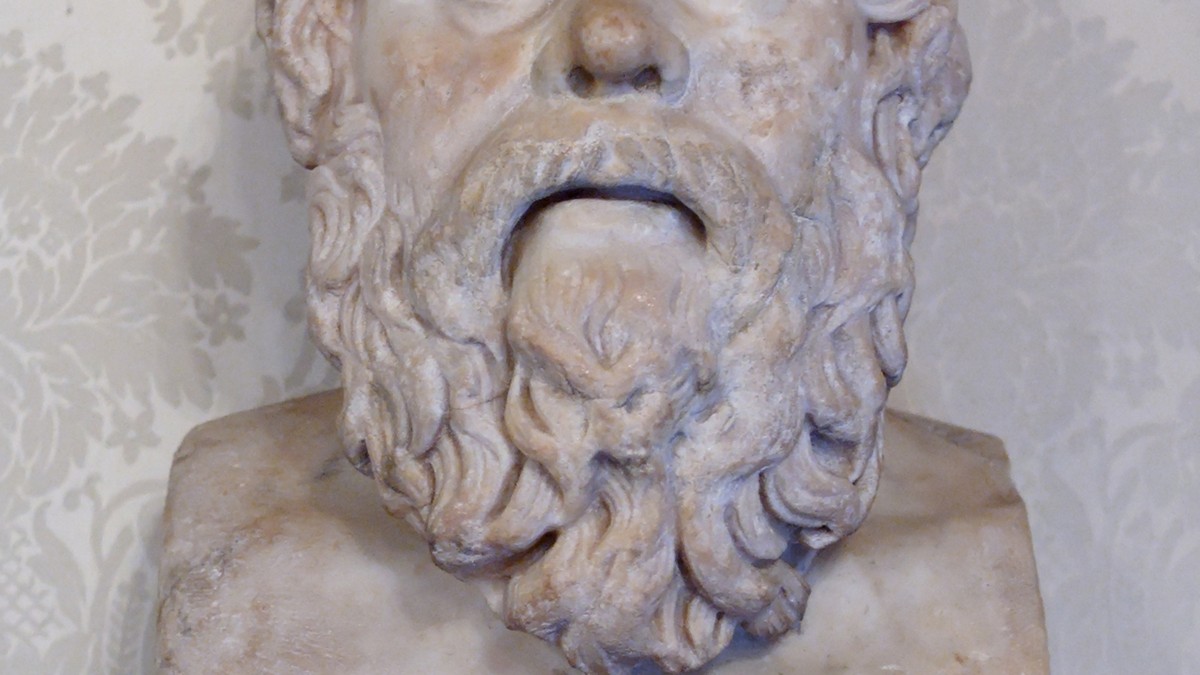
📜 Philosophical Historiography Overview
An exhaustive academic examination of the intellectual revolution in Classical Greece. This monograph explores the transition from mythopoetic worldview (Mythos) to rational inquiry (Logos), analyzing the Ionian and Eleatic cosmologists, the moral epistemology of Socrates, the metaphysical idealism of Plato’s Theory of Forms, and Aristotle’s empirical teleological categorization.
The birth of rational philosophy in classical Hellas represents arguably the most profound intellectual turning point in the history of human consciousness. Prior to the sixth century BCE, human cultures across the ancient Near East and Mediterranean explained natural phenomena, human suffering, psychological impulses, and cosmic origins through mythopoetic narratives (mythos). Earthquakes were attributed to the wrathful trident strikes of Poseidon; celestial lightning bolts were hurled by the hand of Zeus; seasonal agrarian cycles were dictated by Demeter’s mourning over Persephone; and cosmic creation was viewed as the physical progeny of divine sexual unions between primordial deities.
Beginning in the maritime Greek city-states of Ionia (modern western Turkey), a radical, unprecedented intellectual shift erupted: the transition from Mythos to Logos (rational argument, reasoned discourse, and systematic naturalistic inquiry). Early Greek thinkers audaciously proposed that the cosmos was an ordered, coherent, and mathematically intelligible whole (a kosmos, signifying ‘ordered adornment’), governed not by the arbitrary, temperamental caprices of anthropomorphic deities, but by immutable natural laws, underlying universal principles (arche), and causal mechanical processes that could be discovered through empirical observation, critical analysis, and dialectical debate. This intellectual genesis culminated in the Golden Age of Athens through the philosophical triad of Socrates, Plato, and Aristotle, whose metaphysical, epistemological, ethical, and political frameworks laid the structural foundations of Western scientific and intellectual history.
1. The Pre-Socratics: The Ionian Search for the Primordial Arche
The philosophical journey began in the wealthy Milesian commercial trading hub of Ionia with Thales of Miletus (c. 624–546 BCE), recognized by Aristotle as the first natural philosopher. Thales posed a foundational question that had never before been formulated in such terms: What is the fundamental, underlying substance (arche) of which all diverse physical manifestations in the universe are composed, and into which they ultimately return? Stripping away mythological imagery, Thales posited that the universal arche was Water (hydor). Observing that all life requires moisture to germinate, that nourishment is fluid, and that water uniquely exists across multiple observable states (liquid, solid ice, and gaseous steam), Thales made the revolutionary leap from the chaotic multiplicity of sensory experience toward metaphysical monism: the reality that underlying all physical plurality lies an ultimate unity.
Thales’ student, Anaximander of Miletus (c. 610–546 BCE), made an even more profound conceptual abstraction. He argued that no single observable element—such as water, fire, or earth—could serve as the primordial substance, because an element with specific qualities (e.g., wet water) could never produce its absolute opposite (e.g., dry fire). Therefore, Anaximander proposed that the arche was the Apeiron: the Boundless, Infinite, and Indefinite. From this uncreated, eternal cosmic reservoir, opposing primary qualities—the hot and the cold, the moist and the dry—separated out through cosmic vortex motion, eternally giving birth to and dissolving worlds in an endless cycle of cosmic equilibrium and cosmic justice.
| Philosophical School | Key Thinkers | Core Metaphysical Principle (Arche) | Epistemological Legacy |
|---|---|---|---|
| Milesian Monism | Thales, Anaximander, Anaximenes | Physical arche (Water, Apeiron, Air/Pneuma) | First naturalistic, non-mythological explanations of physical universe |
| Ephesian Dynamic Flux | Heraclitus of Ephesus | Fire (Pyr); perpetual change (‘Panta Rhei’); The Logos | Dialectical tension of opposites; reality as eternal process, not static substance |
| Eleatic Static Monism | Parmenides of Elea, Zeno of Elea | The One, Indivisible, Unchanging ‘Being’ (To Eon) | Birth of deductive logic and ontology; sensory illusion vs. pure rational thought |
| Pluralism & Atomism | Empedocles, Anaxagoras, Democritus | Four Roots (Elements); Nous (Mind); Indivisible Atoms (A-tomos) | Precursor to modern atomic theory, conservation of matter, mechanistic physics |
| Classical Idealism | Socrates, Plato | The Good; Theory of Transcendent Forms (Eide) | Objective morality, immortality of the soul, rationalist epistemology |
| Classical Teleology | Aristotle | Hylomorphism (Matter & Form); The Four Causes; Unmoved Mover | Empirical biology, formal categorical logic (syllogism), virtue ethics |
2. The Clash of Titans: Heraclitean Flux vs. Parmenidean Being
The philosophical quest reached an intense metaphysical crisis in the late sixth and fifth centuries BCE through the dialectical clash between Heraclitus of Ephesus and Parmenides of Elea—a conflict that would fundamentally shape Plato’s entire metaphysical system.
Heraclitus ‘The Obscure’ argued that the fundamental nature of reality is not static permanence, but constant, dynamic transformation. His famous aphorism, Panta Rhei (‘everything flows’), was captured in his celebrated observation: ‘You cannot step twice into the same river, for fresh waters are ever flowing in upon you.’ For Heraclitus, the primary physical manifestation of the universe was Fire—an active process of continuous transformation, consumption, and renewal. Yet this relentless flux was not chaotic; it was governed by an underlying cosmic intelligence: the Logos, a rational principle that harmonized opposing tensions, just as the opposing pull of the wooden bow and the taut string creates the harmony of the archer’s shot.
From the Greek colony of Elea in southern Italy, Parmenides launched a devastating logical assault upon the Heraclitean worldview. Writing in hexameter verse in his poem On Nature, Parmenides formulated the earliest rigorous deductive ontological argument in Western history. Parmenides established a strict logical binary:
“What Is (Being), Is, and cannot Not-Be. What Is-Not (Non-Being), Is Not, and cannot Be.”
From this foundational premise, Parmenides deduced that change, motion, birth, death, and spatial plurality are logical impossibilities. If something comes into existence, it must come either from Being (in which case it already was) or from Non-Being (which is nothing and cannot produce anything). Therefore, true reality—Being (To Eon)—must be single, continuous, eternal, unchanging, and indestructible. The sensory world of change, colors, and motion that humans perceive through their eyes and ears is nothing more than an elaborate physiological illusion—the ‘Way of Opinion’ (Doxa)—which must be rejected in favor of pure, uncompromising rational deduction: the ‘Way of Truth’ (Aletheia).
3. Socrates and the Revolutionary Turn Toward Moral Epistemology
In the mid-fifth century BCE, the Athenian stonemason and veteran hoplite Socrates (469–399 BCE) redirected philosophy from abstract cosmological speculations about water and stars toward human interiority, ethics, and civic virtue (arete). As the Roman orator Cicero famously remarked centuries later: ‘Socrates called philosophy down from the heavens, established it in cities, introduced it into homes, and forced it to inquire into life, morals, and things good and evil.’
Operating in the bustling public spaces of the Athenian Agora, Socrates wrote nothing. Instead, he practiced philosophy as an active, subversive oral dialectic: the Socratic Method (Elenchus). Approaching prominent politicians, poets, and Sophists who claimed to possess wisdom, Socrates adopted an ironic stance of intellectual humility—the famous ‘Socratic Ignorance’ (‘I know only that I know nothing’). He would invite his interlocutor to provide a rigorous definition of a foundational moral virtue, such as Justice, Piety, Courage, or Temperance.
Through systematic, relentless cross-examination, Socrates would unearth hidden logical contradictions in his partner’s premises, forcing them into a state of acute cognitive disorientation: Aporia (intellectual impasse). Socrates described himself not as a teacher dispensing doctrine, but as an intellectual ‘midwife’ (maieutics), assisting his interlocutors in purging unexamined dogmas so they could give birth to genuine philosophical insight. His central moral thesis was revolutionary: Virtue is Knowledge (moral intellectualism). No one commits evil knowingly; human wrongdoing stems from profound cognitive ignorance of what is truly good. Therefore, the ultimate duty of a human life is radical self-scrutiny: ‘The unexamined life is not worth living.’
🏺 The Trial and Execution of Socrates (399 BCE)
In the political paranoia following the Peloponnesian War and the fall of the Thirty Tyrants, Socrates was indicted by the Athenian democratic court on two capital charges: impiety (asebeia) for refusing to recognize the city’s traditional gods while introducing new spiritual entities (daimonion), and corrupting the Athenian youth. Convicted by a narrow jury vote of 280 to 220, Socrates refused to grovel, propose a humiliating fine, or escape into exile. Believing that a philosopher must uphold the rule of law even when the court errs, Socrates calmly drank the deadly infusion of hemlock (conium maculatum) in prison, surrounded by his weeping disciples.
4. Plato: The Theory of Forms and The Parable of the Cave
Devastated by the judicial murder of his beloved master, Socrates’ most brilliant disciple, the aristocratic Athenian Plato (428–348 BCE), established the Academy—the world’s first formal institution of higher philosophical learning. In over thirty masterfully written philosophical dialogues, Plato synthesized the Heraclitean world of physical flux with the Parmenidean world of eternal Being by inventing the metaphysical bedrock of philosophical idealism: the Theory of Forms (Eide or Ideai).
Plato divided reality into two distinct realms:
- The Visible Sensory Realm: The physical, material world experienced through our bodily senses. Like Heraclitus’ river, this realm is in constant decay, generation, and change. Physical objects—such as an earthly wooden table, a beautiful statue, or an act of courage—are merely imperfect, degraded, ephemeral shadows or reflections of an ultimate reality.
- The Intelligible Realm of Forms: An eternal, immaterial, transcendent domain accessible solely through pure rational intellect (noesis). Here reside the perfect, immutable, non-spatial archetypes: the Form of Justice, the Form of Beauty, the Form of the Circle, and supreme above all, the Form of the Good, which illuminates intellectual comprehension just as the physical sun illuminates earthly vision.
This dualistic metaphysics was brilliantly encapsulated in Book VII of the Republic through the iconic Allegory of the Cave. Plato envisions human beings chained inside a subterranean cavern from childhood, facing a blank wall, unable to turn their heads. Behind them burns a great fire, and puppeteers carry statues across a parapet, casting dancing shadows onto the cave wall. To the prisoners, these two-dimensional shadows constitute absolute reality. If a prisoner is unshackled and dragged up the steep, rocky ascent into the blinding light of the true sunlit world above, his eyes initially ache with pain. Yet, as his vision adjusts, he beholds real trees, living creatures, the starry heavens, and finally the sun itself. If the enlightened philosopher returns to the darkness of the cave out of compassion to emancipate his fellow prisoners, they ridicule him as mad, and should he attempt to break their chains, they would violently murder him—a poignant, direct allegory of Socrates’ martyrdom at the hands of the Athenian jury.
5. Aristotle: Hylomorphism, The Four Causes, and Empirical Teleology
Plato’s most celebrated pupil, Aristotle of Stagira (384–322 BCE), studied at the Academy for two decades before establishing his own rival philosophical institution: the Lyceum (the Peripatetic school). While deeply indebted to Plato, Aristotle fundamentally rejected his master’s transcendent dualism. In Raphael’s Renaissance masterpiece The School of Athens, this division is captured visually: Plato points his index finger upward toward the celestial realm of transcendent Forms, while Aristotle gestures with his open palm downward toward the physical earth, asserting that forms do not exist in an abstract heavenly realm, but are embedded directly within the physical substance of material objects.
This metaphysical framework is termed Hylomorphism (from hyle, ‘matter’, and morphe, ‘form’). A physical entity—such as a bronze statue—cannot exist as pure abstract form, nor as formless raw matter; it is an indissoluble composite of material substrate (the bronze) shaped and organized by internal formal structure (the shape of Apollo). To fully comprehend any entity in the cosmos, Aristotle formulated the revolutionary doctrine of The Four Causes:
- The Material Cause (Causa Materialis): The physical matter from which an object is composed (e.g., the marble of a bust, or the timber of a trireme).
- The Formal Cause (Causa Formalis): The internal structural blueprint, geometry, or essence that makes a thing what it is (e.g., the proportion of a statue).
- The Efficient Cause (Causa Efficiens): The active primary agent or mechanical force that brings the object into existence (e.g., the sculptor wielding chisel and hammer, or the father biological parent).
- The Final Cause (Causa Finalis / Telos): The ultimate purpose, function, or end toward which the entity develops. This is the cornerstone of Aristotelian philosophy: Teleology. An acorn’s telos is to realize its potential by growing into a magnificent oak tree; a human eye’s telos is clear vision; and the telos of human life is Eudaimonia—the flourishing, active realization of rational moral virtue within a just political community (the polis).
6. The Hellenistic Schools: Stoicism, Epicureanism, and Skepticism
Following the death of Alexander the Great and the dissolution of the independent classical poleis into vast, centralized Hellenistic empires, Greek philosophy shifted its primary orientation once again: from civic institutional governance toward personal therapeutic ethics. In an expansive, unpredictable, and cosmopolitan world where individuals felt powerless before imperial bureaucracies, the Hellenistic philosophical schools emerged as practical manuals for inner tranquility:
1. Stoicism (Founded by Zeno of Citium, c. 300 BCE): Taught beneath the Painted Stoa in Athens. The Stoics asserted that the universe is governed by an all-pervading divine rational principle (the Logos). Humans cannot control external circumstances—illness, war, exile, financial catastrophe, or physical death—but they possess absolute, unassailable sovereignty over their internal judgments, moral intentions, and emotional responses. By distinguishing between what is within our control (our thoughts, desires, virtues) and what is not (fame, wealth, the actions of others), the Stoic sage achieves Apatheia (freedom from destructive passions) and unshakeable inner peace, living in serene harmony with Nature.
2. Epicureanism (Founded by Epicurus, c. 307 BCE): Meeting in a secluded garden, the Epicureans adopted the materialist atomism of Democritus, asserting that the soul is composed of physical atoms that dissipate at death; there is no terrifying Osirian underworld or divine punishment. The ultimate goal of human existence is Ataraxia (untroubled psychological serenity). Rejecting hedonistic overindulgence (which inevitably produces physical suffering and emotional hangover), Epicurus championed refined, modest pleasures: simple bread and water, deep philosophical friendships, and the elimination of the paralyzing irrational fear of death: ‘Death is nothing to us. When we exist, death is not; and when death exists, we are not.’
3. Pyrrhonian Skepticism (Founded by Pyrrho of Elis): Argued that because human sensory perception and logical deduction are inherently fallible and contradictory, human beings can never attain absolute, unassailable objective knowledge. Therefore, the wise philosopher practices Epoche (the deliberate suspension of judgment on all non-evident claims). By ceasing to dogmatically assert that things are fundamentally good or bad, the Skeptic is released from the agonizing anxiety of striving, slipping effortlessly into profound mental tranquility.